21 Days – Tiger Safari India & Photography Tour – Central India
Satpura, Tadoba, Kanha, Bandhavgarh, Panna, Khajuraho temples & Ranthambhore National Park
Trip Facts
Departure date: 12th January 2026 & 2027
Destinations: Satpura, Tadoba, Kanha, Bandhavgarh, Panna, Khajuraho & Ranthambore National Park.
Prices from: £4100 Per Person (Single supplement £1840)
Accommodation: Jungle lodges/resorts
Max. Participants: 08
Min. Participants: 04
No. of the crew: 1 Tour leader & local guide
Vehicle type: Innova or similar, 4X4 Jeep
Duration: 20Nights, 21Days
Meals: Breakfast X 19, Lunch X 19, Dinner X 20
Departure: Delhi
End: Delhi
Best months to visit: October till June
(NOTE – We also provide customized packages for the same tour. Kindly contact us.)
- Highlights
- Place to stay
- Itinerary
- Include/Exclude
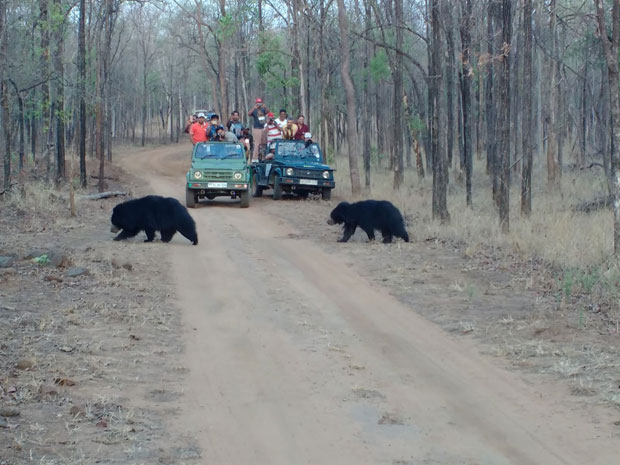
1- Sloth Bear in Satpura National Park
2- Night drive, walking safari in satpura National Park
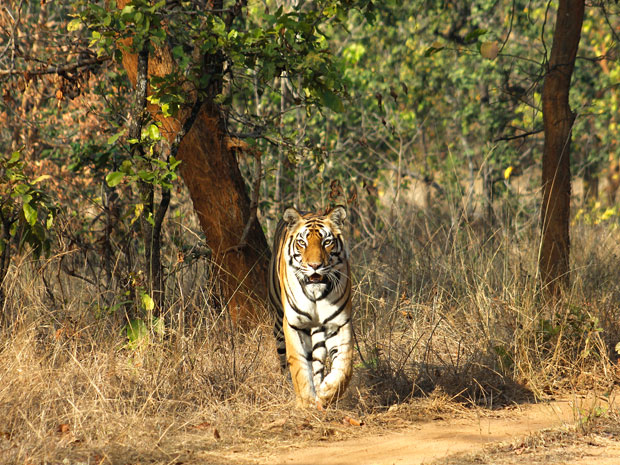
3- Ranthambore Fort, Tiger sighting in Ranthambhore National Park
4- Baiga dance in Kanha National Park
5- Birding in Kanha National Park
6- Beautiful landscape of Kanha National Park
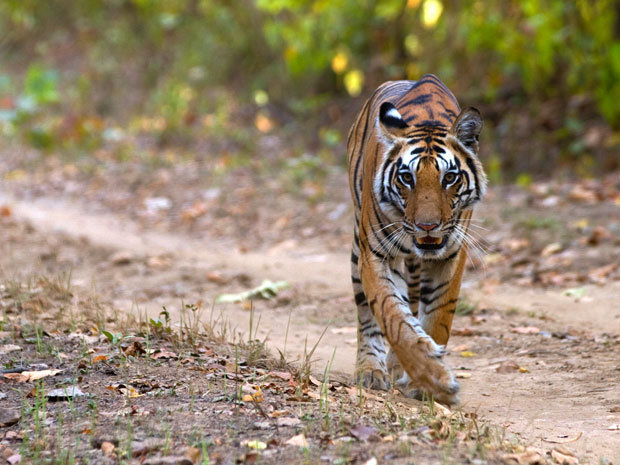
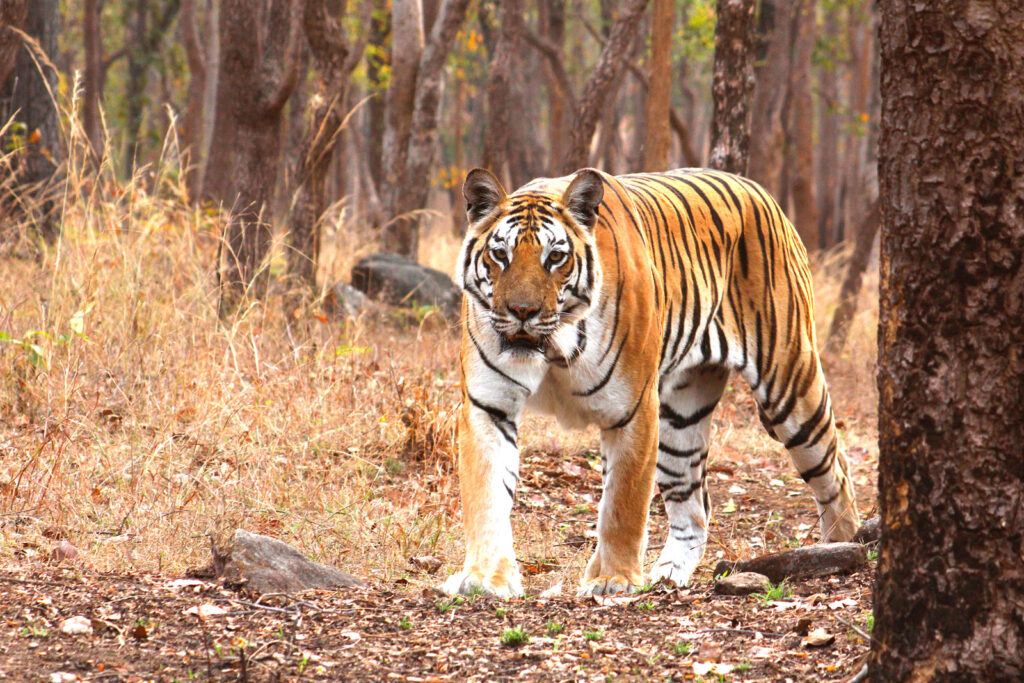
7- Tigers, Leopards, Sloth Bear, and Wild dogs in Kanha National Park
8- Tiger Safari & Photography in Bandhavgarh National Park
9 – Asiatic Elephants in Bandhavgarh National Park
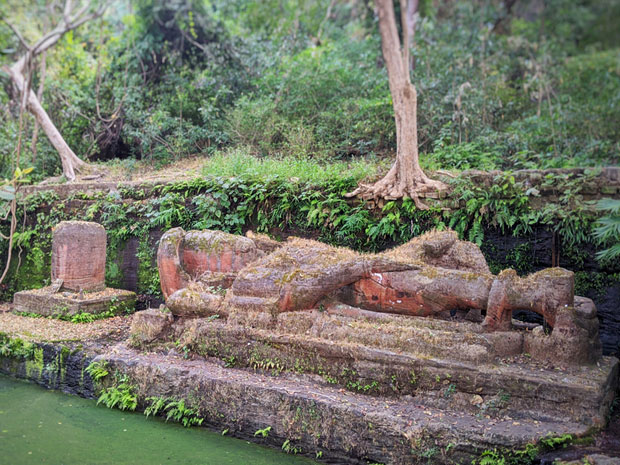
10- Bandhavgarh fort and temple
11 – Breathtaking sceneries of Ranthambhore national park
12- Tiger population in Panna National Park
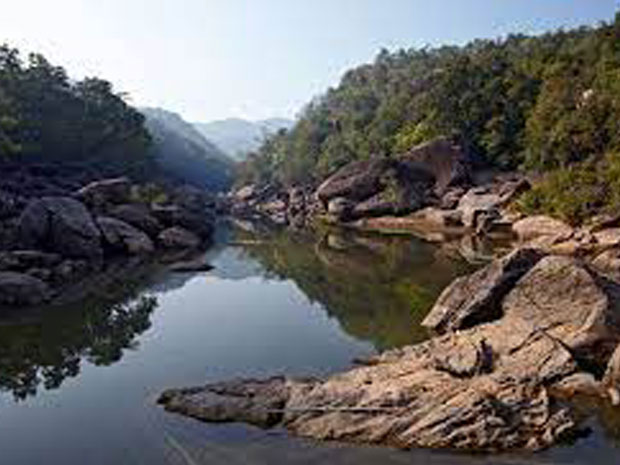
13- Boating in Ken River
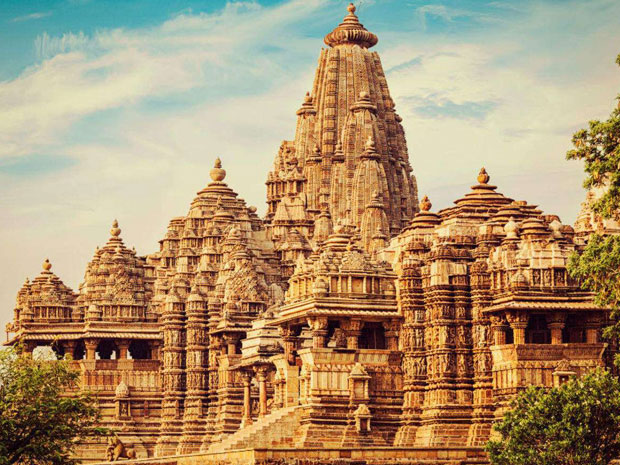
14- Khajuraho temples – Unesco world heritage site
1- Satpura National Park
2- Tadoba National Park
3- Kanha National Park
4- Bandhavgarh National Park
5- Panna National Park
6- Khajuraho – Unesco world heritage site
7- Ranthambhore National Park
8- Delhi
About the Wildlife, Tiger reserves, National parks & Wildlife sanctuaries of central India –
Central India has long been known for its extraordinary wildlife and breathtaking natural beauty. It is a haven for diverse flora and wildlife species, many of which are endangered. Wildlife tourism in Central India provides a unique opportunity to see these gorgeous creatures in their natural habitat while also contributing to conservation efforts.
The diversified environment of central India supports a wide variety of plant and animal species. From the towering Sal trees to the delicate orchids, Central India’s flora is a treat for botany enthusiasts. The fauna is equally captivating, with iconic creatures such as the Royal Bengal tiger, Indian Leopard, Asiatic Wild dogs, Indian grey wolf, Rusty-spotted cat, Bengal fox, Indian jackal, Deer, Antelopes, and other smaller species of animals. However, it is not just the charismatic megafauna that steals the show; Central India is also a haven for countless bird species, reptiles, and amphibians.
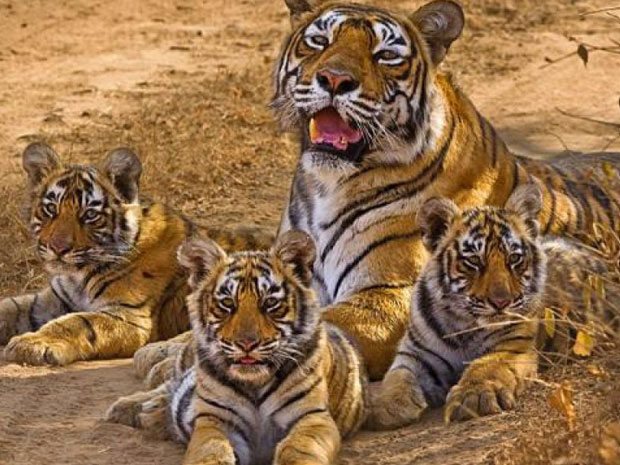
Central India especially Madhya Pradesh has the most Tiger reserves with 6 in total. It also has the largest number of tigers in the entire country at 526 approx. These tiger reserves, national parks, and wildlife sanctuaries provide the perfect habitat for wildlife to live in and roam around freely.
Kanha National Park is known for its sprawling meadows, and dense forests, and is famous for its tiger population. It offers an unforgettable and captivating wildlife safari experience.
Bandhavgarh National Park is renowned for having the highest density of tigers in India and offers a glimpse into the royal world of these magnificent cats. Other notable parks include Satpura, Pench, Panna & Sanjay Dubri National Park, Taboba & Ranthambhore, each place known for its unique offerings and wildlife spectacles.
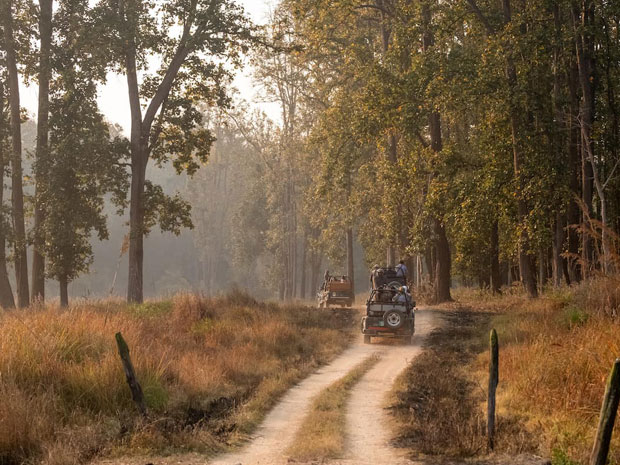
A Wildlife Safari is a thrilling experience that allows tourists to immerse themselves in Central India’s untamed beauty. Safaris of various types are offered, ranging from jeep safaris, night safaris, canoe, and walking safaris to boat safaris, in some areas. These safaris provide an opportunity to witness and photograph the wildlife up close, from the regal tigers and leopards to the playful monkeys and colorful birds. Expert naturalists accompany the safaris, offering valuable insights and enhancing the overall experience.
Day to Day itinerary
Day 1 – Delhi
Today According to your arrival we will pick you up from Delhi airport/railway station and drive to Delhi city hotel. At 7 P.m. group will meet at the hotel lounge/dining for a group introduction and our tour leader will give you the tour details followed by drinks and dinner. Overnight stay in Delhi.
Meals – Dinner
Activity – No activity planned (Optional activity half day Delhi city tour)
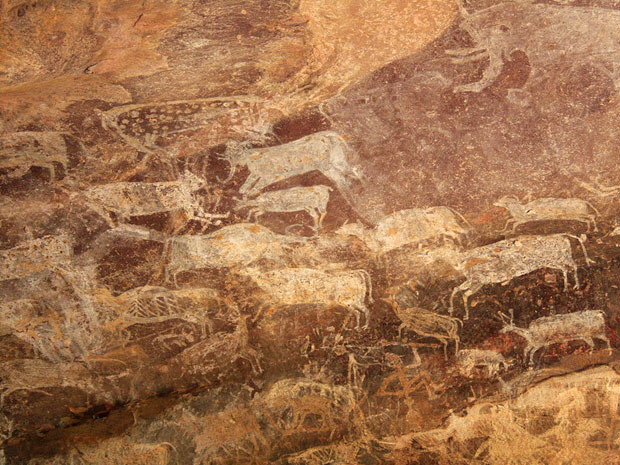
Day 2 – Delhi to Satpura National Park via Bhimbetka rock shelter
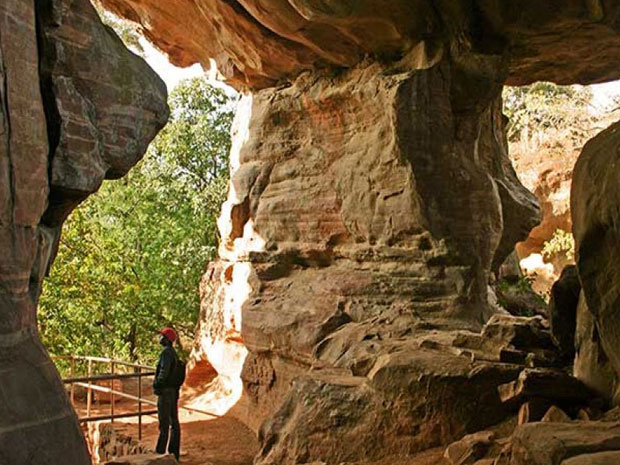
Today we will take an early morning flight to Bhopal which is the nearest airport and city to Satpura National Park. After reaching Bhopal our taxi driver will pick up us and drive to Satpura National Park. On the way, we will visit Bhimbhetka also known as Bhimbetka rock shelter. We will spend 2 hours looking for these rock shelters and cave paintings. After that, we will again proceed on our journey to Satpura National Park. On arrival, check in at our riverside resort. Have lunch and take some rest before starting our evening activity. In the evening, we will go for a walking safari. Thereafter, return to the resort. Dinner & overnight stay in Satpura.
Meals – Breakfast, Lunch & Dinner
Activity – Bhimbetka Rock Shelter & Walking Safari
About Bhimbetka –
The Bhimbetka Rock Shelter has the oldest-known rock art in India, as well as is one of the largest prehistoric complexes to be seen. The cave paintings provide evidence of human civilization during 8,000 B.C. i.e. a period approximately 10,000 years ago!
An archaeological treasure, Bhimbetka has around 243 rock shelters and has earned the honor of UNESCO World Heritage Site.
About Satpura National Park –
Satpura Tiger Reserve Located in the south of the river Narmada, The forest of the Satpura ranges is rich in biodiversity and is inhabited by many endangered species. Keeping this specialty in mind, Satpura Tiger Reserve was declared the first biosphere reserve of Madhya Pradesh in the year 1999. The high ranges of the Pachmarhi plateau are covered by Sal forests, whereas dense teak forests are spread over its lower hill ranges. Here, 26 species of the Himalayan region and 42 species of Nilgiri areas are found. due to which Satpura Tiger Reserve also known as the northern extremity of Western Ghats. This large land is an important habitat for the protection of tigers. This area is home to almost 14 endangered species, among which Giant Squirrel, Indian Skimmer, Black Bellied Tern, Leaf-nosed Bat, etc. are the specialty of the area. More than 300 species of birds are found here, including the Malabar Pied Hornbill, Malabar Whistling Thrush, and Madhya Pradesh’s state bird Paradise Flycatcher (Doodhraj). Apart from this, migratory birds such as Bar-headed Geese, Pintails, Spot-bills, spoon-bills, etc. also appear in large groups during the autumn. Eurasian otters have also been seen here in the past.
Day 3 & 4 – Satpura national park
We start our day early with the morning safari. Early morning is the best time to look for the big cats and other predators and even sloth bears also for which the Satpura is known among wildlife travelers. The birdlife is also very active. The undulating terrain, dense river, and numerous dry streambeds form the perfect setup. Post lunch we go for our evening safari. Dinner & Overnight stay in Satpura.
Meals – Breakfast, Lunch & dinner
Activity – Morning and evening jungle safari on both days
Day 5 – Satpura to Tadoba National Park
Today after having an early breakfast at the resort, we will drive to Tadoba National Park. It’s an 8-hour journey through the beautiful countryside. After reaching our resort at Tadoba, check in, have some rest, shower, and come for an early dinner. Overnight stay in Tadoba.
Meals – Breakfast, Packed lunch & dinner
Activity – None
About Tadoba National Park –
Tadoba National Park is one of India’s most prominent wildlife reserves, located in the Chandrapur district of Maharashtra. It’s renowned for its rich biodiversity and is part of the larger Tadoba-Andhari Tiger Reserve. It is one of the best places in India to see tigers in their natural habitat. It has a healthy population of Bengal tigers, and sightings are relatively frequent compared to other reserves. The park boasts a diverse range of wildlife, including leopards, sloth bears, Indian wild dogs (dholes), sambar deer, and various species of birds. The rich flora includes teak, bamboo, and other dry deciduous trees. The park features a mix of dense forests, grasslands, and water bodies. The Tadoba Lake and the Andhari River are significant water sources in the park, supporting a variety of wildlife.
Day 6 & 7 – Tadoba National Park
We start our day early with the morning safari. Early morning is the best time to look for the big cats and other predators. The birdlife is also very active. The undulating terrain, deciduous teak forest, Tadoba lake, and numerous dry streambeds form the perfect setup. Post lunch we go for our evening safari. Dinner & Overnight stay in Tadoba.
Meals – Breakfast, lunch & dinner
Activity – Morning & evening jungle safari on both days
Day 8 – Tadoba to Kanha National Park
Today after having breakfast at our resort, we will drive to Kanha National Park. On reaching the resort, after check-in have some rest, shower, and come for an early dinner. Overnight stay in Kanha.
Meals – Breakfast, Packed lunch & dinner
Activity – None
About Kanha National Park –
Kanha National Park also known as Kanha-Kisli National Park is one of the famous tiger reserves of India and the largest national park located in the magical land of Madhya Pradesh. Kanha National Park was created on 1 June 1955 and was designated as a tiger reserve in the year of 1973. Today, it sprawls over an area of 940 square kilometers. It is one of the most popular Tiger reserves in India which attracts flocks of wildlife enthusiasts every year.
The Kanha National Park is reckoned as the perfect habitat for large amounts of herbivores and carnivore animals. Tourists can discover the abundant varieties of wildlife. It is the only location in India where the most abundant variety of Barasingha can be found and so does to call them the “Jewel of Kanha”. This National Park has thick vegetation kinds of Sal trees Bamboo forests and grasslands. The moderate and favorable climate and varied topography support the growth of a rich and varied flora in the Park. Kanha trees have more than 70 species of trees. This large, evergreen, gregarious tree is found in North India, up to an elevation of 914 meters. The timber is largely used for railway sleepers and more than 500 species of birds.
Day 9 & 10 – Kanha National Park
We start our day early with the morning safari. The evergreen Sal forest, Kanha meadows, and perennial water bodies that flow through the year make this forest a beautiful and perfect place to see big cats. Post lunch we go for our evening safari. Dinner & Overnight stay in Kanha.
Meals – Breakfast, lunch & dinner
Activity – Morning & evening jungle safari on both days
Day 11 – Kanha to Bandhavgarh national park
Today after having breakfast at our resort, we will drive to Bandhavgarh National Park.
On reaching the resort, after check-in, have some lunch and rest before your evening activity. In the evening we go for a night safari in the buffer forest of Bandhavgarh National Park. Seeing the jungle and wildlife animals at night is an amazing experience. Dinner & overnight stay in Bandhavgarh.
Meals – Breakfast, Lunch & dinner
Activity – Night safari
About Bandhavgarh National Park –
Bandhavgarh National Park in Madhya Pradesh is an amazing combination of thrill and interesting stories. Bandhavgarh, with an area of 105 square kilometers (41 sq mi), was declared a national park in 1968 and then became Tiger Reserve in 1993. The current core area is spread over 716 square kilometers (276 sq mi). The three main zones of the national park are Tala, Magdhi, and Khitauli. Tala is the richest zone in terms of biodiversity, mainly tigers. Altogether, these three ranges comprise the ‘core’ of the Bandhavgarh Tiger Reserve, constituting a total area of 716 km2. It is here where we will see the grand Fort of Bandhavgarh which was gifted by Lord Rama to his younger brother Laxman. The name Bandhavgarh is a testimony to this fact. Bandhav means Brother and Garh means Fort in the local dialect. You will also witness 2000 years old man-made caves with interesting inscriptions and rock paintings. Bandhavgarh Tiger Reserve’s charm is irresistible. It has the highest density of tigers in India. A variety of scenic landscapes and vegetation also makes this place an awe-enchanting paradise for travelers. The best part is this popular national park in India has so much more to enjoy apart from its amazing wildlife sightings and safari that one trip to this reserve is not enough.
Day 12 & 13 – Bandhavgarh national park
We start our day early with the morning safari. Early morning is the best time to look for the big cats and other predators. The birdlife is also very active during this time of the day. Bandhavgarh is best known for its Evergreen Sal forest and Mixed forest more than 100 species of Plant are found there and is also home to approx. 242 species of Birds and many species of reptiles and Insects are found there. Post lunch we go for our evening safari. Overnight stay in Bandhavgarh.
Meals – Breakfast, lunch & dinner
Activity – Morning & evening jungle safari on both days
Day 14 – Bandhavgarh to Panna National Park
Today after having breakfast at our resort we will drive to Panna National Park. On reaching the resort, After check-in, have some lunch and take some rest before your evening activity. In the evening we go for an evening safari or night safari in the buffer forest of Panna National Park. Seeing the jungle and wildlife animals at night is an amazing experience. Animals that can be seen during night safari in Panna National Park are hyenas, rusty spotted cats, jungle cats, porcupines, honey badgers, Desert cats, fishing cats, Sloth bears, Tiger, Leopard, civet cats, and lots of other nocturnal animals. Here in Panna, national park, night safaris are more fruitful than in other popular tiger reserves. Dinner And overnight stay in Panna.
Meals – Breakfast, lunch & dinner
Activity – Evening safari
About Panna National Park –
Panna National Park is a national park located in Panna and Chhatarpur districts of Madhya Pradesh in India. It has an area of 542.67 km2 (209.53 sq mi). It was declared in 1994 as the twenty-second Tiger Reserve of India and the fifth in Madhya Pradesh. Panna was given the Award of Excellence in 2007 as the best-maintained national park of India by the Ministry of Tourism of India. It is notable that by 2009, the entire tiger population had been eliminated by poaching with the collusion of forest department officials.
The forests of Panna National Park along with Ken Gharial Sanctuary and adjoining territorial divisions form a significant part of the catchment area of the 406 km Ken River, which runs northeast for about 72 km through the park. Panna National Park and the surrounding forest area of North and South Panna forest division is the only large chunk of wildlife habitat remaining in northern Madhya Pradesh.
Story of reintroduction of Tigers in Panna national park
(From 0 to 84-86 Tigers in 14 years)
Panna National Park was declared as one of the Tiger reserves of India in 1994/95 and placed under the protection of Project Tiger. The decline of the tiger population in Panna has been reported several times. Two female tigers were relocated there from Bandhavgarh National Park and Kanha National Park in March 2009. However, the last male tiger from this landscape had already disappeared. A committee to look into the disappearance of the tigers was formed.
In June 2009, it was officially announced that the Reserve, which had over 40 tigers six years earlier, had no tigers left and only two tigresses, which were brought in a little earlier. In February 2012, only three years later, the entire tiger population of the reserve was considered eliminated. The Madhya Pradesh government did not determine responsibility for the debacle, nor did it pass the inquiry to the Central Bureau of Investigation in spite of requests from the Ministry of Environment and Forests and the Prime Minister’s Office.
The Ministry of Environment and Forests (MoEF) approved a proposal to translocate two tigers and two tigresses to the reserve. One female each from Bandhavgarh National Park (coded T1) and Kanha National Park (T2) were translocated to Panna Tiger Reserve. A tiger male, coded T3, was brought from Pench Tiger Reserve but strayed out of the park shortly thereafter, in November 2009. The tiger started walking toward its home in Pench National Park, indicating homing instinct. It moved steadily through the human-dominated landscape without causing any conflict. Forest department staff tracked it continuously for over a month and finally brought it back to the Panna Tiger Reserve. It then settled well, established territory, and started mating. The tigress, T1, translocated from Bandhavgarh National Park, gave birth to four cubs in April 2010 of which 2 survive to date. The second tigress, T2, translocated from Kanha National Park gave birth to four cubs several months later and all four survive to date. A third tigress, coded T4, an orphaned cub was reintroduced to Panna in March 2011. She learned hunting skills with the help of the male and mated with him. She was found dead on 19 September 2014 of an infection caused by its radio collar. Her sister T5 was released in Panna in November 2011.
Today the population of Tigers in Panna National Park is from 0 to 84-86 in 14 years.
Day 15 – Panna National Park
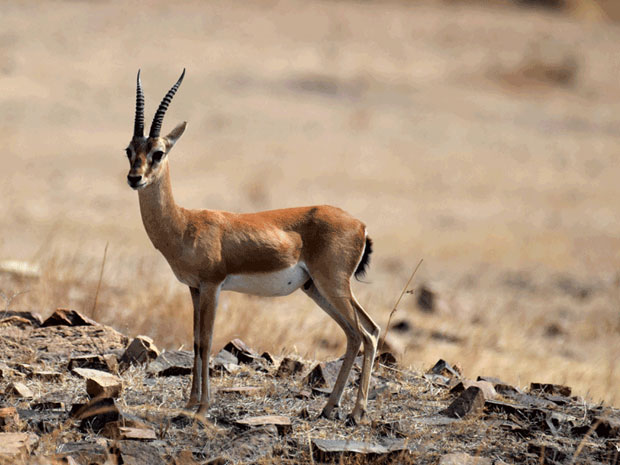
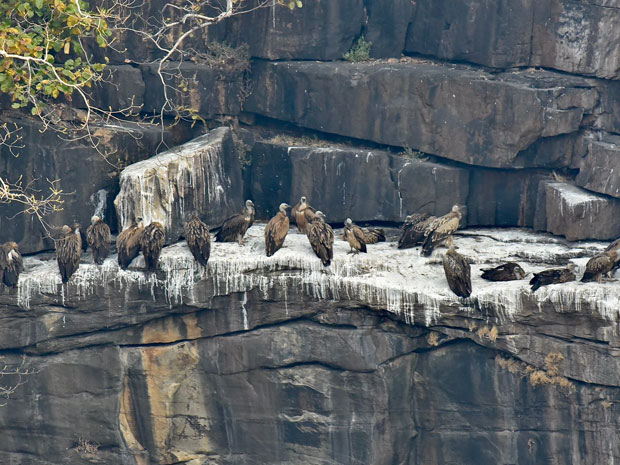
We start our day early with the morning safari. Early morning is the best time to look for the big cats and other predators. The birdlife is also very active during this time of the day. Tiger the king of the jungle, roams freely in this secure, though a bit small habitat along with his fellow beings leopard, wild dog, wolf, hyaena, and smaller cats. Sloth Bear has his favorite home in the rock escarpments and undisturbed vales. The wooded areas are dotted with sambar the largest of Indian deers, chital, and chowsingha. One can easily see Blue Bull and Chinkara in most open areas in the grasslands, especially on the periphery. The avifauna comprises more than 200 species including a host of migratory birds. One can see White necked storks, Bar-headed geese, Honey Buzzard, Blossom-headed Parakeet, Paradise flycatchers, Slaty slaty-headed Scimitar babblers including 5 species of Vultures. A dry and hot climate, in union with shallow Vindhyan soils, has given rise to dry Teak and dry mixed forest. The dominating vegetation type is Miscellaneous Dry Deciduous forest interspread with grassland areas. Other major forest types are riverine, open grasslands, open woodlands with tall grasses, and thorny woodlands. Post lunch we go for our evening safari. Dinner & Overnight stay in Panna.
Meals – Breakfast, lunch & dinner
Activity – Morning & evening jungle safari
Day 16 – Panna to Khajuraho – Unesco world heritage site
Today we will have an early breakfast at our lodge and drive to Khajuraho, a Unesco world heritage site. Khajuraho temples are primarily noted for their erotic sculptures. The land of beautiful temples, Khajuraho in Madhya Pradesh draws travelers from across the globe. Being an important part of Madhya Pradesh tourism, the place speaks volumes about the history and culture of the bygone era. But these temples are so much more than their erotic sculptures. These world-famous Indian temples were built during the Chandela dynasty and most temples were constructed between 950 and 1050 AD during the reigns of Hindu Kings Yasovarman and Dhanga. Khajuraho has a beautiful market where you can roam around and buy beautiful stuff made by locals and souvenirs, and lots of multi-multicuisine cafes and restaurants where you can taste different food. Overnight stay in Khajuraho.
Meals -Breakfast, Lunch & Dinner
Activity – 1 full-day city tour
Day 17 – Khajuraho to Ranthambore National Park
Today early morning we will start our drive to Ranthambore National Park. It’s a 7-hour beautiful countryside drive that goes through the buffer forest of 2 national parks ( Kuno and Madhav). After reaching the resort around, check-in, Take some rest, and come for lunch. Evening leisure or Visit Ranthambore fort.
Meals – Packed Breakfast, Lunch & Dinner
Activity – Leisure/Ranthambore fort (optional)
About Ranthambore National Park
Nestled in the heart of Rajasthan, Ranthambore National Park is a premier wildlife sanctuary and a gem for nature enthusiasts and adventure seekers alike. Spanning over 1,300 square kilometers, this magnificent park is renowned for its rich biodiversity and picturesque landscapes, making it a must-visit destination for wildlife lovers.
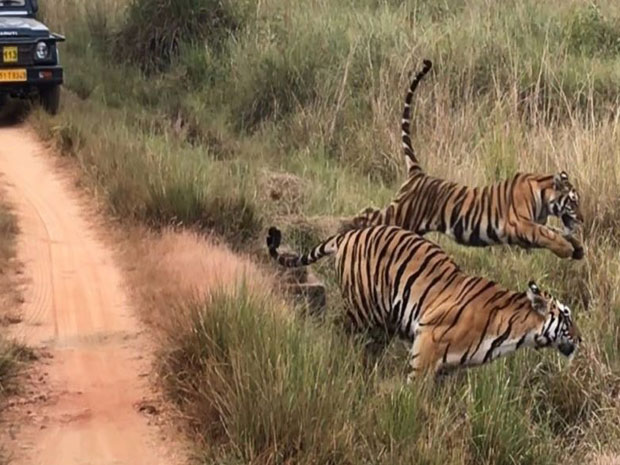
Ranthambore is celebrated for its thriving population of Bengal tigers, offering one of the best opportunities to spot these majestic predators in their natural habitat. The park is also home to a variety of other wildlife species, including leopards, sloth bears, wild boars, and numerous deer species. Birdwatchers will be delighted by the park’s avian diversity, with over 300 bird species calling it home.
The park’s diverse landscape ranges from lush, tropical forests to open grasslands and tranquil lakes. The flora includes a mix of deciduous trees, shrubs, and medicinal plants, contributing to the park’s vibrant ecosystem. Ranthambore is not just about wildlife; it’s also a site of historical significance. The park is named after the Ranthambore Fort, a majestic 10th-century fortress that stands atop a hill overlooking the park. The fort, now a UNESCO World Heritage Site, adds a historical charm to the natural beauty of the area.
Day 18 & 19 – Ranthambore National Park
We start our day early with the morning safari. Early morning is the best time to look for the big cats and other predators. The birdlife is also very active during this time of the day. Ranthambore is known for its Tiger, Leopard, and Sloth bear sightings. We will start our morning safari by tracking these magnificent creatures. Post lunch we go for our evening safari. Overnight stay in Ranthambore.
Meals – Breakfast, lunch & dinner
Activity – Morning & evening jungle safari on both days
Day 20 – Ranthambore National Park to Delhi
Today we will go birding around the camp. After coming back from birding scession we will have breakfast, freshen up, pack our bags, and drive to Delhi. After reaching Delhi, check in, take some rest and we will meet again at the restaurant at 7 PM for our final dinner. Overnight stay in Delhi.
Meals – Breakfast, lunch & dinner
Activity – Birding around lodge
Day 21 – Delhi
Today according to your flight/train timing, we will drop you at the airport/railway station. The trip ends here.
Meals – None
Includes
- Airport transfers (Pick up & drop)
- Accommodation on a sharing basis
- Accommodation on Single sharing ( at an extra cost)
- Domestic flight/train if required
- All Meals as mentioned in the itinerary
- All activities as mentioned in the itinerary
- National park entries, forts/monuments/heritage building entries, city tours, adventure activities as mentioned in the itinerary (Charges may vary if the govt. changes the prices at the time of the booking)
- All ground transportation in Air conditioned Taxi
- Services of 1 tour leader + local guides/trackers (if applicable)
- Service of potters
- Gratuity to safari drivers, guides, resorts, and taxi drivers
Excludes
- Camera charges
- Visas
- Flights (All international & domestic flights)
- Travel Insurance
- Optional Activities
- Drinks, Tips, phone calls, laundry & items of a personal nature
- Gratuity to expedition leader or tour leader
- Anything that is not mentioned in the “Included section”