Trip Facts
Departure date: Can be booked from 15th November till May
Destinations: Delhi, Manas & Kaziranga National Park, Gibbons Wildlife Sanctuary
Prices from: Kindly contact us
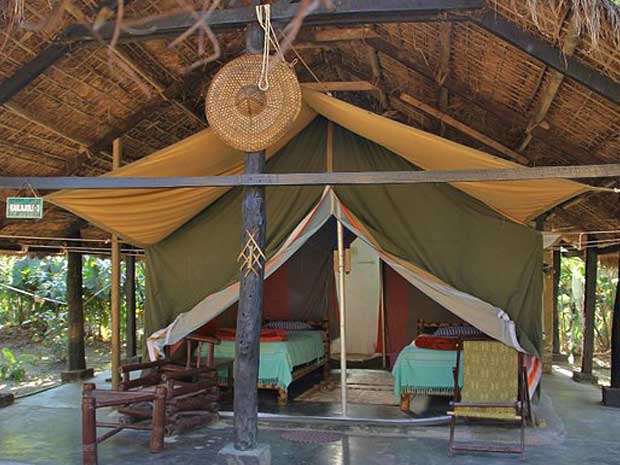
Accommodation: Luxury hotels & jungle lodges
Max. Participants: 08
No. of the crew: 1 Tour leader & local guide
Vehicle type: Innova or similar, 4X4 Jeep
Duration: 9 Nights, 10 Days
Meals: Breakfast X 8, Lunch X 8, Dinner X 9
Departure: Delhi
End: Delhi
Best months to visit: November till May
(Note – We also provide customized packages for the same tour. Kindly contact us.)
- Highlights
- Place to stay
- Itinerary
- Include/Exclude
- Wetlands
- Unesco world heritage sites
- Greater one-horned rhino
- Big 5 of India
- Endemic Birding
- India’s only Ape species – Hoolock gibbons
- Asiatic elephants
- Full day safaris
- Luxury Stay
- Authentic food
- Delhi
- Manas national park
- Kaziranga national park
- Gibbon wildlife sanctuary
DAY 01: DELHI
Today according to your arrival we will pick you up from Delhi airport/railway station and drive to a city hotel. At 7 P.m., the group will meet at the hotel lounge/dining for a group introduction and our tour leader will give you the tour briefing. Overnight stay in Delhi.
Meals – Dinner
Activity – None (Optional activity – Half-day city tour)
DAY 02: DELHI TO MANAS NATIONAL PARK VIA GUWAHATI
Today we will take an early morning flight to Guwahati, which is the nearest airport and city to Manas and Kaziranga National Park. Breakfast on the flight. After reaching Guwahati our taxi drivers will pick us up and drive to Manas National Park through the beautiful countryside of Assam, it’s a 3-hour drive, after reaching our resort, check in, have your lunch, and get ready for 1st afternoon safari. After returning from safari, freshen up and come for the checklist followed by drinks and dinner. Overnight stay in Manas.
Meals – Breakfast, Lunch & Dinner
Activity – Afternoon safari
ABOUT MANAS-
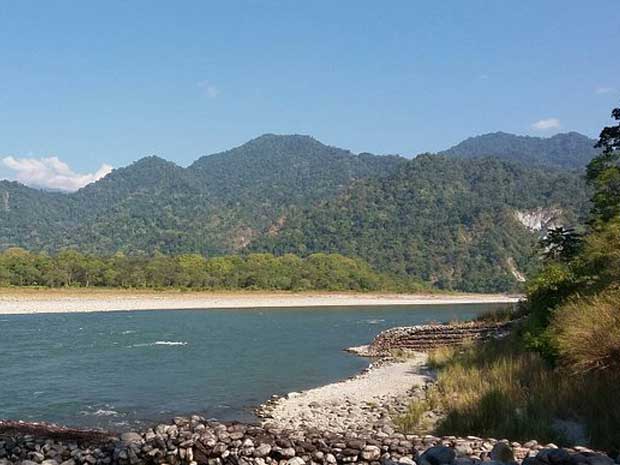
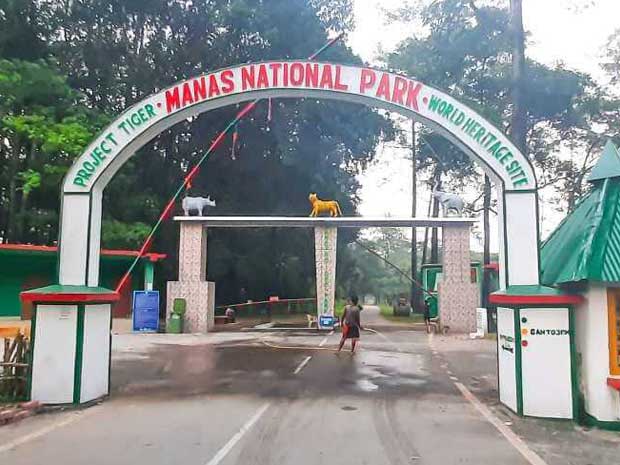
Manas National Park is a national park, Project Tiger Reserve, and an elephant reserve in Assam, India. Located in the Himalayan foothills, it borders the Royal Manas National Park in Bhutan. The park is known for its rare and endangered endemic wildlife such as the Assam roofed turtle, hispid hare, golden langur, and pygmy hog. Manas is also famous for its population of wild water buffalo. Because of its exceptional biodiversity, scenery, and variety of habitats, Manas National Park is a biosphere reserve and a UNESCO World Heritage Site.
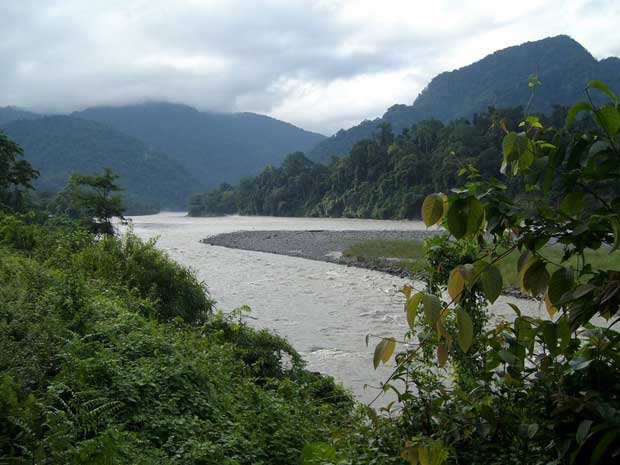
The name of the park originated from the Manas River.
The sanctuary has recorded 55 species of mammals, 380 species of birds, 50 reptiles, and 3 species of amphibians. Out of these wildlife, 21 mammals are India’s Schedule I mammals and 31 of them are threatened.
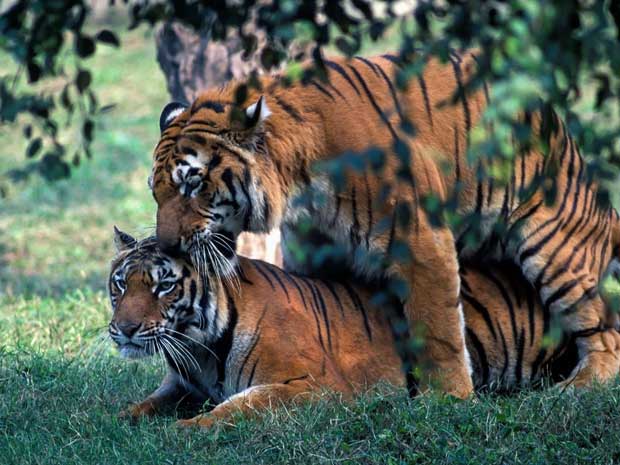
The fauna of the sanctuary includes Indian elephants, Indian rhinoceros, gaurs, wild water buffaloes, barasingha, Indian tigers, Indian leopards, clouded leopards, Asian golden cats, jungle cat, leopard cat, fishing cat, marbled cat, Indian wolf, dholes, golden jackal, Bengal fox, capped langurs, golden langurs, Assamese macaques, rhesus macaque, gray langur, slow loris, hoolock gibbons, smooth-coated otters, sloth bears, nilgai, four-horned antelope, barking deer, hog deer, black panthers, sambar deer and chitals and large Indian civet, common palm civet, spotted Linsang, yellow-throated marten, black giant squirrel, Indian porcupine, Indian pangolin, Chinese pangolin, wild boar.
The park is well known for species of rare and endangered wildlife not found anywhere else in the world like the Assam roofed turtle, hispid hare, golden langur, and pygmy hog.
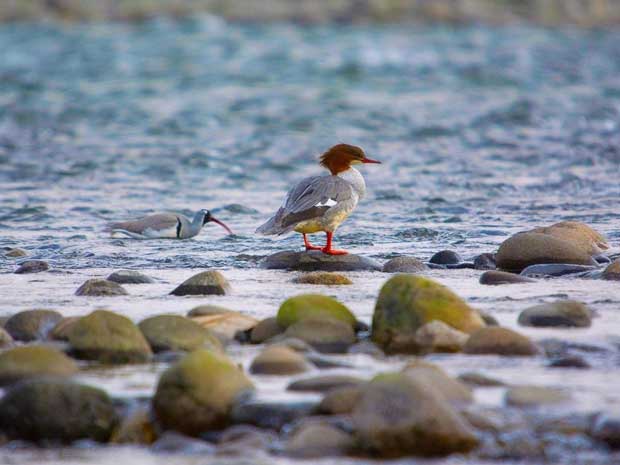
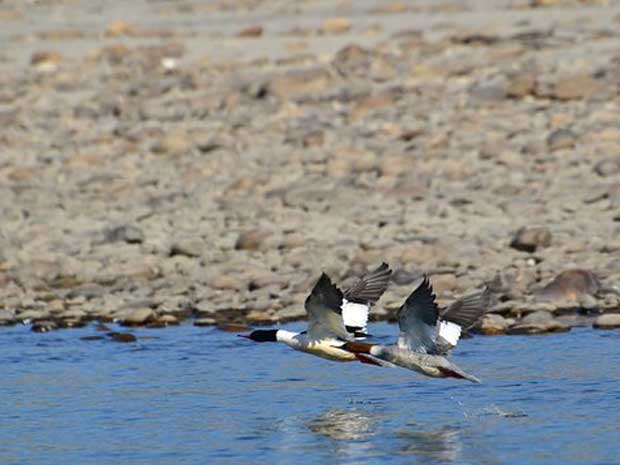
The Manas hosts more than 450 species of birds. It has the largest population of the endangered Bengal florican to be found anywhere. Other major bird species include great hornbills, jungle fowls, bulbuls, brahminy ducks, kalij pheasants, egrets, pelicans, fishing eagles, crested serpent-eagles, falcons, scarlet minivets, bee-eaters, magpie robins, pied hornbills, grey hornbills, mergansers, harriers, Indian peafowl, ospreys and herons.
DAY 03 to 04: MANAS NATIONAL PARK
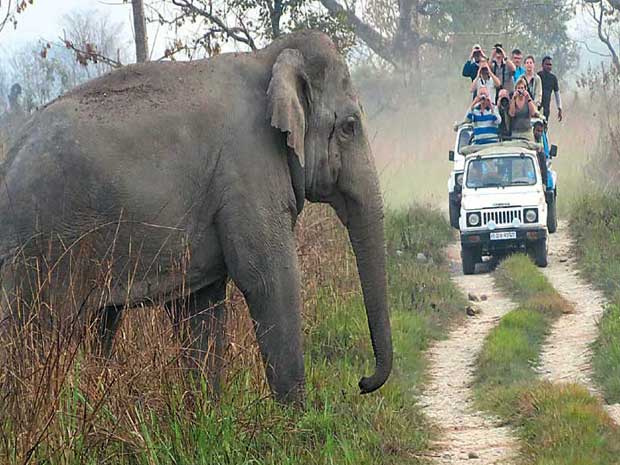
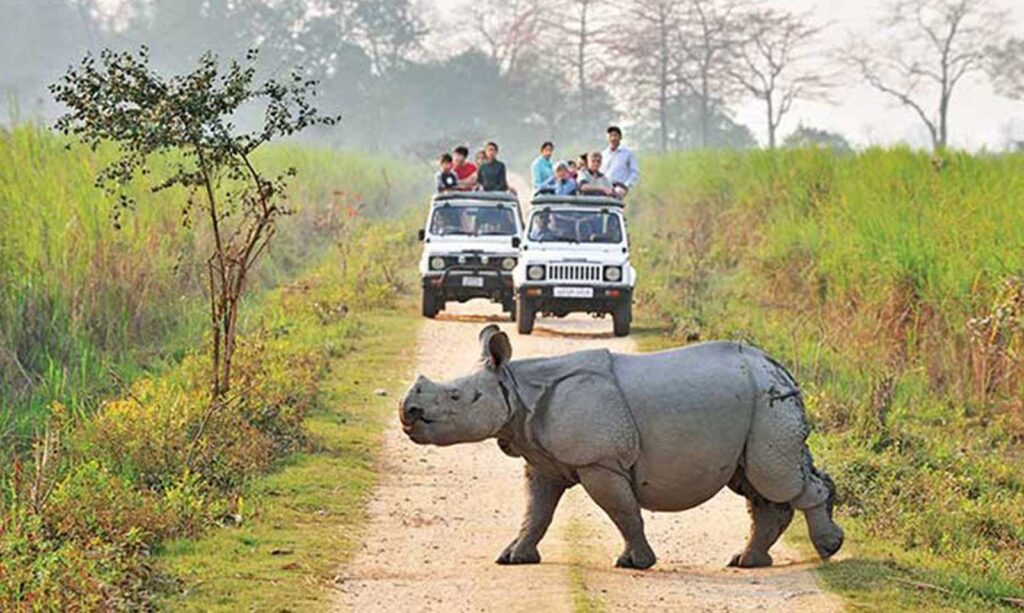
Today early morning we will have our tea/coffee at our lodge, and leave for a morning safari looking for the big 5 of India, Elephants, rhinos, Water buffalo, Tiger & Leopard. Manas is known for its beautiful Himalayan birds also. After coming from our morning drive we will have lunch, take some rest, and then get ready for an afternoon safari. Dinner and overnight stay in Manas.
Meals – Breakfast, Lunch & Dinner
Activity – Morning & Afternoon safari on both days
DAY 05: MANAS – KAZIRANGA NATIONAL PARK
Today after having an early breakfast at our resort, we will drive to Kaziranga National Park, it’s a 350 km drive and can take 8 hours. Lunch we will do on the way/packed lunch. After reaching Kaziranga we will check in at our resort, no activities are planned for today. The group will meet again at 7 PM for dinner. Overnight stay in Kaziranga.
Meals – Breakfast, Lunch & Dinner
Activity – No activity
ABOUT KAZIRANGA
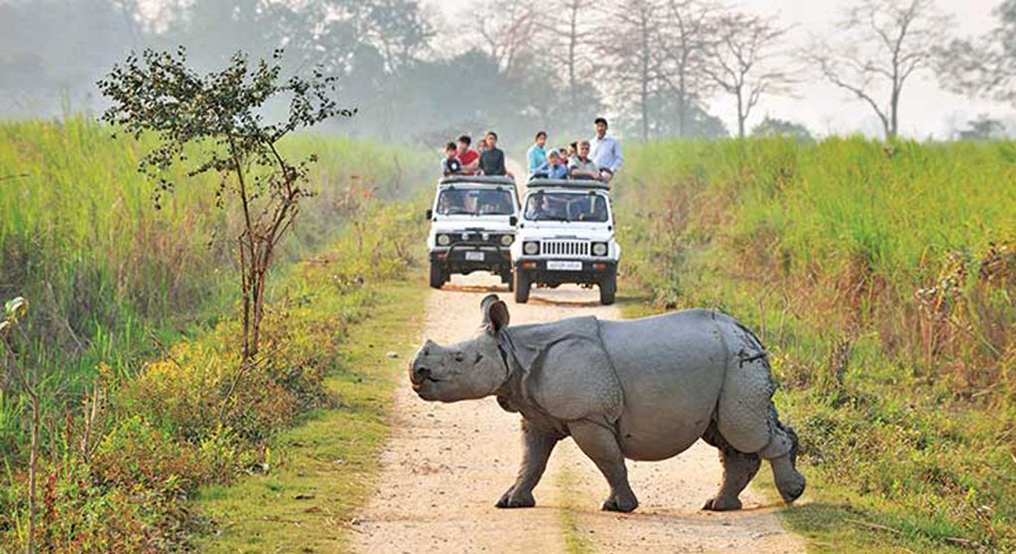
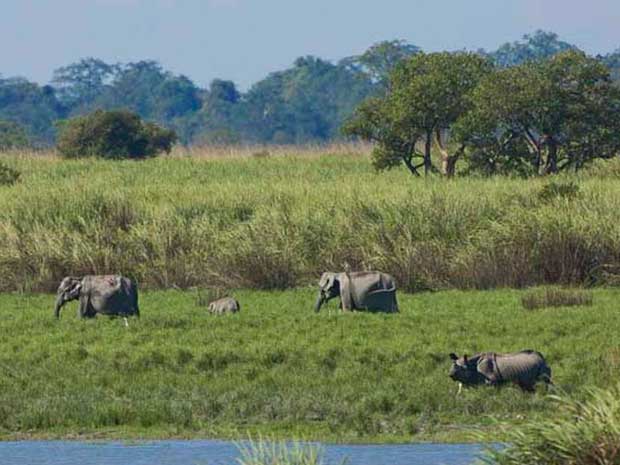
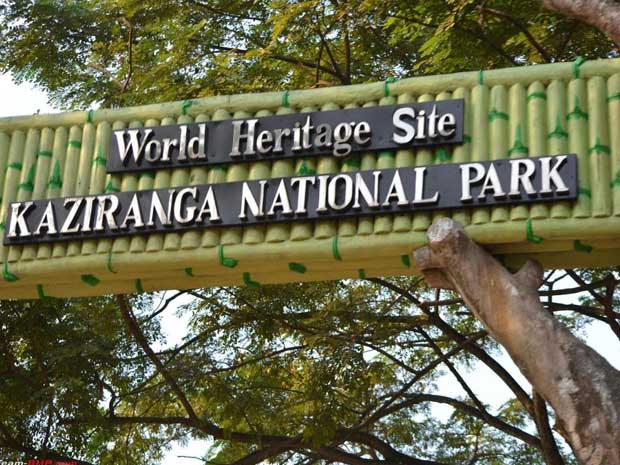
Kaziranga Wildlife National Park is the title of a remarkable success story of the conservation of the One Horned Indian Rhinoceros and other lives in North East India. It is not only the homeland of the Great Indian One Horned Rhinoceros but also provides shelter to a variety of wild lives. It is one of the significant Wildlife natural habitats for in situ conservation of biological biodiversity of universal value. The values and criteria made Kaziranga National Park inscribed in the World Heritage Site List 1985. The wildlife Kaziranga National Park covered area consists of 429.93 Sq.Km. with an additional area of 429.40 Sq.Km. and is situated in the two districts of Assam, namely Golaghat and Nagaon. The total area of the wildlife conservation park within Nagaon district is 175 Sq.Km., out of which 135 Sq.Km. falls under the Bagori Forest Range office and 40 Sq.Km. falls within the Ghorakati Forest Range office.
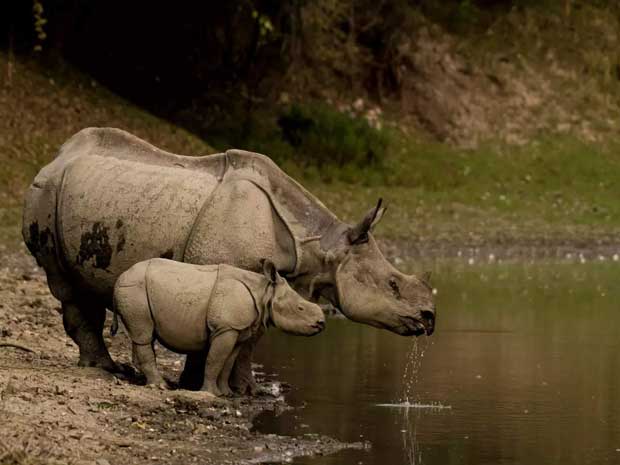
A few centuries ago, the Indian one-horned Rhinocerous ranged across the north Indian plains in the wetlands of the rivers Indus, Ganga, and Brahmaputra. Today this survivor from prehistoric times is found only in pockets in the northeastern state of Assam and Nepal. In Assam, their Rhino habitat is limited to just two national parks – Kaziranga and Manas.
Kaziranga National Park is a birding paradise; the grasslands are a raptor country that can be seen on safari making a remarkable experience.
Besides of course the great one-horned Indian Rhino, the other major wild attractions include a large population of Indian Elephants, Indian Bison, Swamp Deer or Barasingha, Hog Deer, Sloth Bears, Tigers, Leopard Cats, Jungle Cats, Otters, Hog Badgers, Capped Langurs, Hoolock Gibbons, Wild Boar, Jackal, Wild Buffalo, Pythons, Monitor Lizards, etc.
Kaziranga National Park is a birding paradise; the grasslands are a raptor country that can be seen on safari making a remarkable experience. These include the Oriental Honey Buzzard, Black-Shouldered Kite, Black Kite, Brahminy Kite, Pallas’s Fishing Eagle, White Tailed Eagle, Grey-Headed Fishing Eagle, Himalayan Griffon, etc. Huge numbers of migratory birds descend on the park lakes and marshy areas during winters, including Greylag Geese, Bar-Headed Geese, Ruddy Shelduck, Gadwall, Falcated Duck, Red-Crested Pochard, and Northern Shoveller.
DAY 06 to 07: KAZIRANGA NATIONAL PARK
Today early morning we will have our tea/coffee at our lodge, and leave for a morning safari looking for the big 5 of India, Elephants, rhinos, Water buffalo, Tiger & Leopard. Kaziranga is known for its beautiful Himalayan birds also. After coming from our morning drive we will have lunch, take some rest, and then get ready for an afternoon safari. Dinner and overnight stay in Kaziranga.
Meals – Breakfast, Lunch & Dinner
Activity – Morning & afternoon jungle safari on both days
DAY 8: KAZIRANGA – GIBBON WILDLIFE SANCTUARY
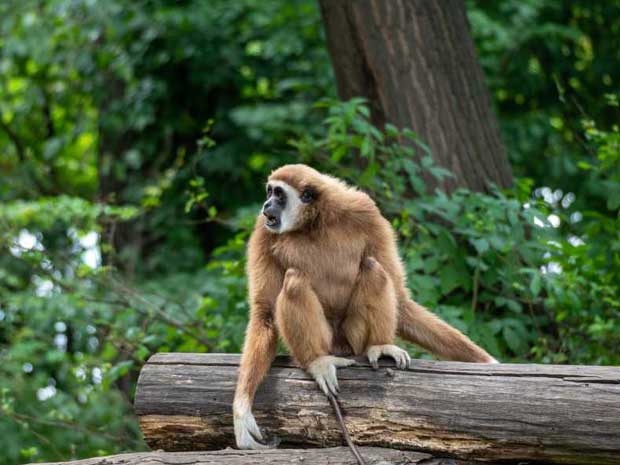
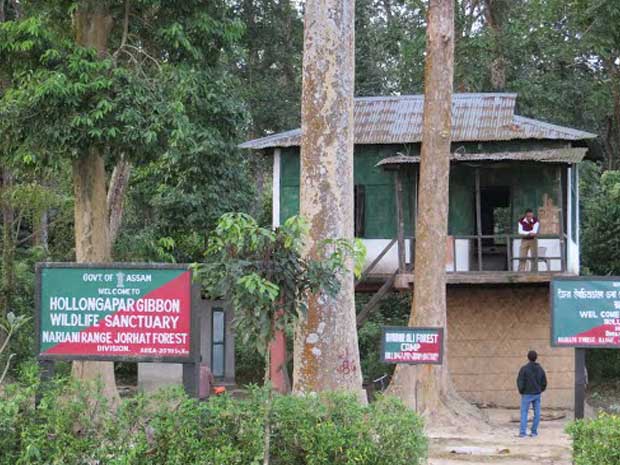
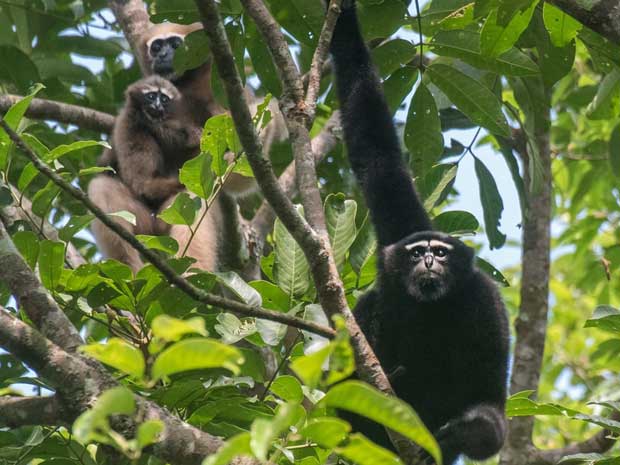
Today early morning we will drive to Gibbon WLS (03 hrs drive), on reaching we will spend time inside the sanctuary, popularly known for the Hoolock Gibbon and a good place to spot the resident Pig-Tailed Macaque and Stump-tailed Macaque, besides Assamese Macaque, Rhesus Macaque, and Capped Langur. After we visit the Wildlife sanctuary, we will return to Kaziranga in the evening. Dinner and overnight stay in Kaziranga.
Meals – Breakfast, Lunch & Dinner
Activity – Full day at Gibbon Wildlife Sanctuary
DAY 9: KAZIRANGA – DELHI VIA GUWAHATI
Today after having breakfast at our hotel, we will drive to Guwahati to catch our Delhi flight. Taxi drives will pick us up and drive to delhi city hotel. We will check in at our hotel, No activity is planned for today. At 7 P.m. group will meet at the hotel dining for a farewell drink and dinner. Overnight stay in Delhi.
Meals – Breakfast, Lunch & Dinner
Activity – None
Day 10 – DELHI (TRIP ENDS HERE)
Today according to your flight timing, we will drop you at Delhi airport. The trip ends here.
Meals – None
Includes
- Airport transfers (Pick up & drop)
- Accommodation on a sharing basis
- Accommodation on Single sharing ( at an extra cost)
- Domestic flight/train if required
- All Meals as mentioned in the itinerary
- All activities as mentioned in the itinerary
- National park entries, forts/monuments/heritage building entries, city tours, adventure activities as mentioned in the itinerary (Charges may vary if the govt. changes the prices at the time of the booking)
- All ground transportation in Air conditioned Taxi
- Services of 1 tour leader + local guides/trackers (if applicable)
- Service of potters
- Gratuity to Taxi driver, hotel staff, safari guide and driver
Excludes
- Camera charges
- Visas
- Flights (All international)
- Travel Insurance
- Optional Activities
- Drinks, Tips, phone calls, laundry & items of a personal nature
- Gratuity to Expedition leader or tour leader
- Anything that is not mentioned in the “Included section”